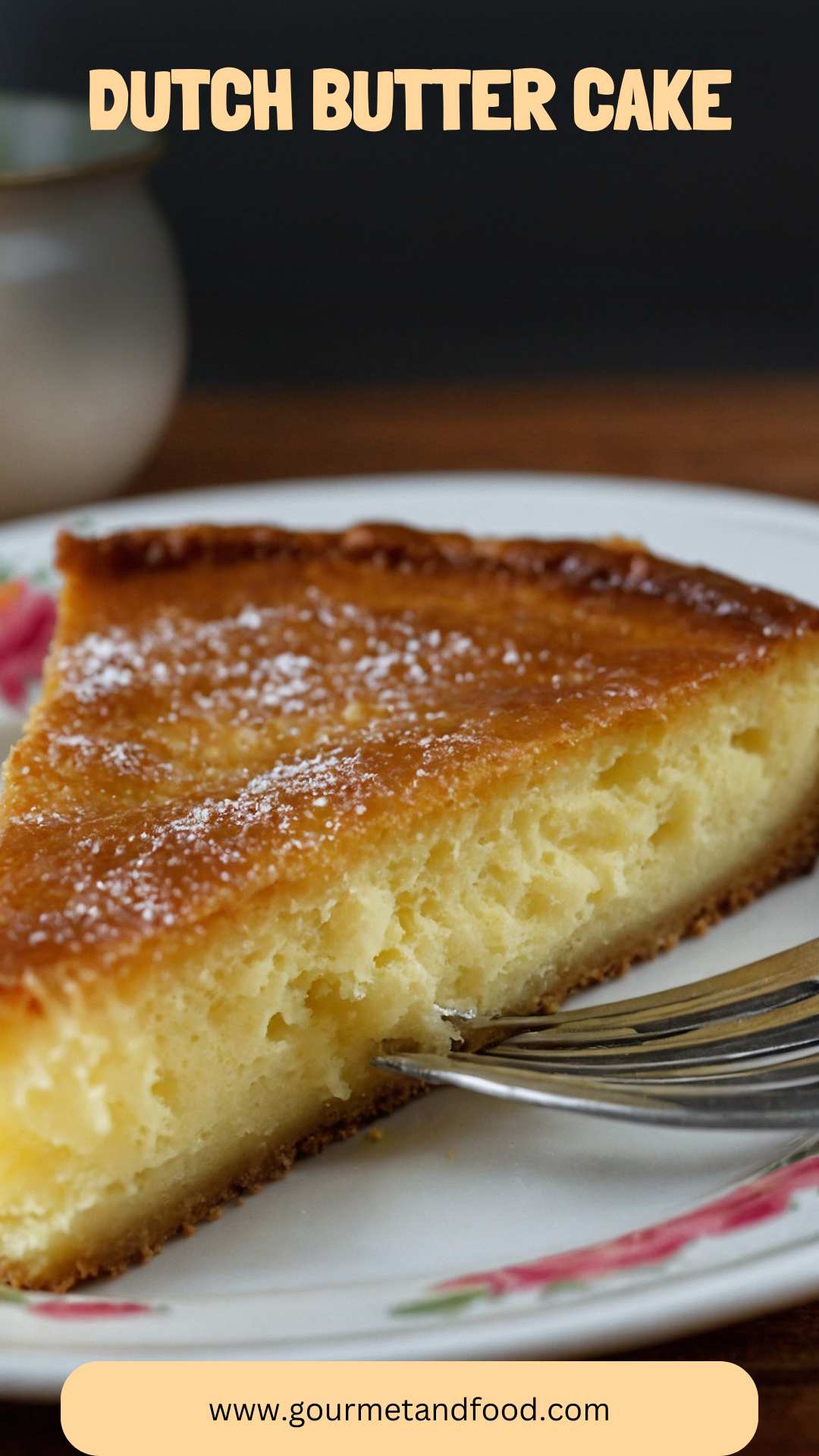
Ingredients
Method
- Here’s a step-by-step guide to baking your Dutch butter cake.
Step 1: Preheat the Oven
- Start by preheating your oven to 350°F (175°C). This ensures that your cake bakes evenly.
Step 2: Prepare Your Baking Pan
- Grease an 8-inch round cake pan with butter. Line the bottom with parchment paper for easier removal later.
Step 3: Beat the Butter and Sugar
- In a large mixing bowl, cream together the softened butter and superfine sugar. Use a hand mixer or stand mixer on medium speed. Beat until the mixture is light and fluffy; about 3-5 minutes. You’re aiming for a pale yellow blend that feels airy and delightful.
Step 4: Add the Egg and Flavorings
- Crack the large egg into the butter-sugar mix. Add the vanilla extract (or vanilla sugar) and beat again until combined. This should take about 1 minute.
Step 5: Combine Dry Ingredients
- In a separate bowl, whisk together the sifted flour, cornstarch, ground cardamom, and sea salt. Mixing the dry ingredients ensures an even flavor distribution in your cake.
Step 6: Mix Wet and Dry
- Gradually add the dry mixture to the wet blend. Stir gently with a spatula or a wooden spoon until just combined. Avoid overmixing; a few lumps are okay.
Step 7: Pour into the Pan
- Transfer the batter into your prepared cake pan. Use a spatula to smooth the top if needed.
Step 8: Bake
- Place the pan in the preheated oven and bake for about 30-35 minutes. You can check for doneness by inserting a toothpick in the center—the toothpick should come out clean.
Step 9: Cool and Serve
- Once done, remove the cake from the oven and let it cool in the pan for about 10 minutes. Transfer to a wire rack to cool completely before serving.
Notes
Here are some handy tips to make your baking experience even better:
- Use Room-Temperature Butter: Softened butter mixes better, ensuring a fluffier cake.
- Sift Dry Ingredients: Sifting avoids lumps and helps with lightness.
- Chill the Cake: After baking, a brief chill in the fridge can help firm up the texture.
- Don’t Overmix: Overmixing leads to a denser, less pleasant texture.