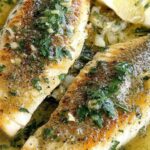
Pan Fried Sea Bass With Lemon Garlic Herb Sauce - Gourmet And Food
Imagine sitting down to a meal that’s not only delicious but also visually stunning. Picture crispy skin on a perfectly cooked portion of sea bass, nestled atop a bright sauce bursting with lemon and herbs.
That’s what you’ll find with this pan-fried sea bass with lemon garlic herb sauce. It’s easy to whip up on a weeknight, yet impressive enough for guests. As a registered dietitian and avid home cook, I treasure recipes that can flow seamlessly into both casual and formal settings.
In this blog post, we will not only explore the making of this delightful dish, but I will also share insights into its flavor profile, the ingredients involved, and provide you with tips that will elevate your cooking game. Let’s start by understanding what this dish actually is.
Servings 4
Calories 385kcal
Ingredients
- 1.5 pounds sea bass such as barramundi
- 1/4 cup all-purpose flour
- 1 teaspoon kosher salt plus extra if needed
- 1/2 teaspoon freshly ground black pepper plus extra if needed
- 3 tablespoons unsalted butter, divided
- 1 tablespoon extra virgin olive oil
- 2 cloves garlic, finely minced
- 1/4 cup dry white wine such as Sauvignon Blanc
- 1/2 cup chicken stock or broth or water in a pinch
- Juice of one lemon about 2 tablespoons
- 1 tablespoon fresh oregano, roughly chopped
- 1 tablespoon fresh thyme, roughly chopped
- 1 tablespoon fresh flat-leaf parsley, roughly chopped
- 1 teaspoon capers for a briny contrast
- 1/2 teaspoon red pepper flakes for a slight heat
- Lemon wedges, for serving optional
Instructions
Step 1: Prepare the Fish
- Begin by patting your sea bass fillets dry with a paper towel. This step is crucial; moisture on the fish will prevent it from achieving that coveted crispy skin. Season both sides generously with kosher salt and black pepper. Then, dredge each fillet lightly in the all-purpose flour. Shake off any excess; you want a thin coating—the flour helps the fish crisp up beautifully.
Step 2: Heat the Pan
- In a large skillet, heat 2 tablespoons of unsalted butter and 1 tablespoon of olive oil over medium-high heat. The fat should be hot but not smoking. You can test this by flicking a drop of water into the pan—if it sizzles, you’re ready!
Step 3: Cook the Sea Bass
- Carefully lay the fish in the pan, skin side down. This will create a delicious crust. Cook without moving them for about 4-5 minutes, until the skin is golden. Flip the fillets, and cook for another 3-4 minutes on the flesh side until the fish flakes easily and is cooked through. Once done, transfer the fillets to a plate and keep warm.
Step 4: Make the Sauce
- In the same skillet, lower the heat to medium and add the remaining tablespoon of butter. Once melted, toss in the minced garlic and sauté for about 30 seconds until fragrant, but do not let it brown. Pour in the white wine to deglaze the pan, scraping up any flavorful brown bits left behind. Let it simmer for a minute, then add chicken stock, lemon juice, and capers. Allow the sauce to reduce for about three minutes until slightly thickened.
Step 5: Add Herbs
- Once the sauce has reduced, stir in the chopped herbs and red pepper flakes. Taste and adjust the seasoning, adding extra salt or pepper as needed. The sauce should be bright, flavorful, and full of life.
Step 6: Serve
- Place the sea bass fillets on plates and drizzle the lemon garlic herb sauce generously over the top. Serve with lemon wedges on the side for an extra citrus kick. Enjoy!
Notes
- Use high-quality fish: Freshness matters. Look for sustainable sources to ensure you're getting the best flavor.
- Don’t skip the drying step: Patting the fish dry leads to crispy skin, which is a game-changer.
- Adjust heat as needed: If your pan gets too hot, the fish skin can burn before the inside cooks through. Keep an eye on it.
- Play with different herbs: While fresh oregano and thyme are traditional, feel free to experiment with dill or basil for a unique spin.
- Don’t rush the sauce: Allow the sauce to reduce properly. This deepens flavors and creates a more cohesive dish.