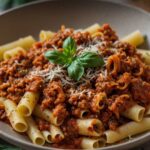
Pasta With Bolognese Sauce Recipe - Gourmet And Food
When it comes to enjoying a hearty meal, few dishes rival the rich, satisfying experience of pasta with Bolognese sauce. Pair it with a crisp side salad or a slice of freshly baked garlic bread, and you’ve got a feast that pleases the senses.
I remember the first time I tasted this iconic Italian dish. It was an evening filled with laughter, good company, and a comforting bowl of Bolognese. This meal transcended mere satisfaction; it sparked a culinary love affair for years to come. Let’s explore this amazing dish together.
Servings 8
Calories 265kcal
Ingredients
- 2 tablespoons extra virgin olive oil
- 1 lb. lean ground beef
- 2 cloves garlic
- 16 oz. rigatoni pasta
- 24 oz. marinara sauce
- 1/4 cup finely grated Pecorino Romano cheese
- 1 teaspoon dried oregano
- Kosher salt
- Freshly ground black pepper
- Fresh chopped parsley
Instructions
- Let’s set the stage. Picture yourself in the kitchen, aromatic ingredients laid out and anticipation bubbling in the air. Making pasta with Bolognese sauce is straightforward but incredibly rewarding. I’ll guide you through the steps with clarity and helpful tips.
Step 1: Sauté the Aromatics
- Heat the oil in a large skillet over medium heat. Once hot, add the minced garlic. Sauté it gently until fragrant—don’t rush this step. This is where you'll start to build layers of flavor.
Step 2: Brown the Meat
- Add the ground beef, breaking it up with a wooden spoon. Cook until browned and no longer pink. The sizzling sound is music to any food lover’s ears. Stir in a pinch of salt and black pepper to season the meat early on.
Step 3: Introduce the Vegetables
- For an authentic touch, toss in finely diced onions, carrots, and celery (if you have them). Cook these until softened. This trio of veggies—often dubbed the "holy trinity" in Italian cooking—adds depth and sweetness to your sauce.
Step 4: Pour in the Marinara
- Once your vegetables are tender, it’s time to add the marinara sauce. Stir everything together and let it simmer. The longer it simmers, the more the flavors meld. Aim for at least 20 minutes, allowing time for the sauce to thicken beautifully.
Step 5: Boil the Pasta
- While the sauce simmers, bring a large pot of salted water to a boil. Cook your pasta according to the package instructions until al dente. Adjust cooking times depending on the pasta shape you chose.
Step 6: Combine Everything
- Once the pasta is cooked, reserve a cup of pasta water, then drain the rest. Toss the pasta into the sauce, adding a little reserved water if necessary. Mix until the pasta is fully coated. It’s a satisfying sight, isn’t it?
Step 7: Serve and Garnish
- Plate your pasta, and sprinkle with Pecorino Romano and parsley. Maybe even throw in a few extra grinds of pepper. Set the table, grab a glass of Chianti, and prepare for an unforgettable meal.
Notes
Here are some pointers to elevate your Bolognese sauce:
Use quality ingredients: The better the ingredients, the better your sauce will taste. Opt for fresh vegetables and high-quality meat.
Simmer longer: Don’t rush the simmering process. Let flavors deepen over time—30 to 60 minutes is even better.
Wine for depth: If you're into cooking with wine, a splash of red wine in the sauce can add another layer of complexity.
Cheese mix: Experiment with different cheeses. Grana Padano or Parmigiano-Reggiano can add nuanced flavors.
Freeze leftovers: If you’ve made a large batch, freeze the leftovers in airtight containers. Bolognese sauce is often better the next day.