Maria George
There’s something profoundly elegant about serving a bowl of chilled gazpacho on a warm summer afternoon. This Spanish tomato soup embodies everything I adore about refined cuisine that nourishes the body without sacrificing flavor or visual appeal. Whether you’re planning a sophisticated lunch or a light dinner, gazpacho pairs beautifully with fresh salads like my my favorite salad or lighter vegetable-forward dishes such as 5-Minute Sautéed Spinach with Garlic and Lemon. It’s the perfect way to celebrate whole vegetables while honoring both culinary tradition and nutritional science.
A Summer Memory That Taught Me Everything About Gazpacho
I’ll never forget the summer I turned sixteen, when my grandmother invited me to help her prepare gazpacho for our family’s annual July celebration in her kitchen. The afternoon sun streamed through the windows, and the aroma of ripe tomatoes and sherry vinegar filled every corner. She moved with such grace—selecting each tomato with intention, explaining how the ripeness determined everything, how we had to honor the vegetables by understanding their season and essence.
What struck me most wasn’t just the technique, but the philosophy behind it. My grandmother believed that gazpacho wasn’t simply summer soup—it was a meditation on freshness, balance, and the idea that sometimes the most nourishing foods require no cooking at all. That lesson stayed with me through my studies in nutrition science and my culinary training. Today, I recognize what she intuitively understood: gazpacho is a masterclass in how whole foods deliver both wellness and indulgence.
What is Authentic Gazpacho Recipe?
Gazpacho is a cold Spanish soup with roots tracing back to Andalusia, a region known for its agricultural abundance and culinary innovation. Traditionally, it emerged as a practical way to use overripe tomatoes and stale bread, transforming humble ingredients into something extraordinary. The soup is primarily vegetable-based—tomatoes, cucumber, bell pepper, and aromatics—blended to a silky consistency and served chilled.
What makes authentic gazpacho remarkable is its simplicity and its complexity simultaneously. There are no cream elements, no added starches beyond a single slice of bread used as a binder. Instead, the recipe relies on the natural emulsification that occurs when fresh vegetables are processed with quality olive oil, allowing the flavors to develop into something far greater than their individual parts. As a registered dietitian, I’m drawn to gazpacho because it demonstrates how the most beautiful cuisine is often the most nutritious—no hidden ingredients, no unnecessary additives, just vegetables in their purest form.
Why You’ll Love This Authentic Gazpacho Recipe
- Nutrient Density Without Compromise – Every spoonful delivers lycopene from tomatoes, vitamin C, potassium, and antioxidants. The raw vegetables retain their full micronutrient profile, unlike cooked soups where heat can degrade certain vitamins. This is exactly the kind of nutritional advantage that drew me to study dietetics in the first place.
- No-Cook Elegance – In high heat months, your kitchen remains cool and unburdened. The entire preparation takes minutes, yet the result tastes like you spent hours developing layers of flavor. This is the definition of elegant efficiency.
- Visually Stunning – Gazpacho’s deep crimson color comes from natural pigments—anthocyanins and carotenoids—that also happen to be powerful anti-inflammatory compounds. When plated with thoughtful garnishes and a careful drizzle of golden olive oil, this soup becomes a piece of edible art.
- Endlessly Customizable – Once you understand the base formula, you can adapt gazpacho to any season or preference. The foundation remains steady while your creativity can flourish. I often prepare variations based on what my local farmers market offers in different months.
- Perfect for Entertaining – You can prepare gazpacho hours in advance, allowing flavors to marry and develop. It requires no last-minute attention, freeing you to focus on your guests. This is the kind of make-ahead sophistication that defines refined entertaining.
The Ingredients
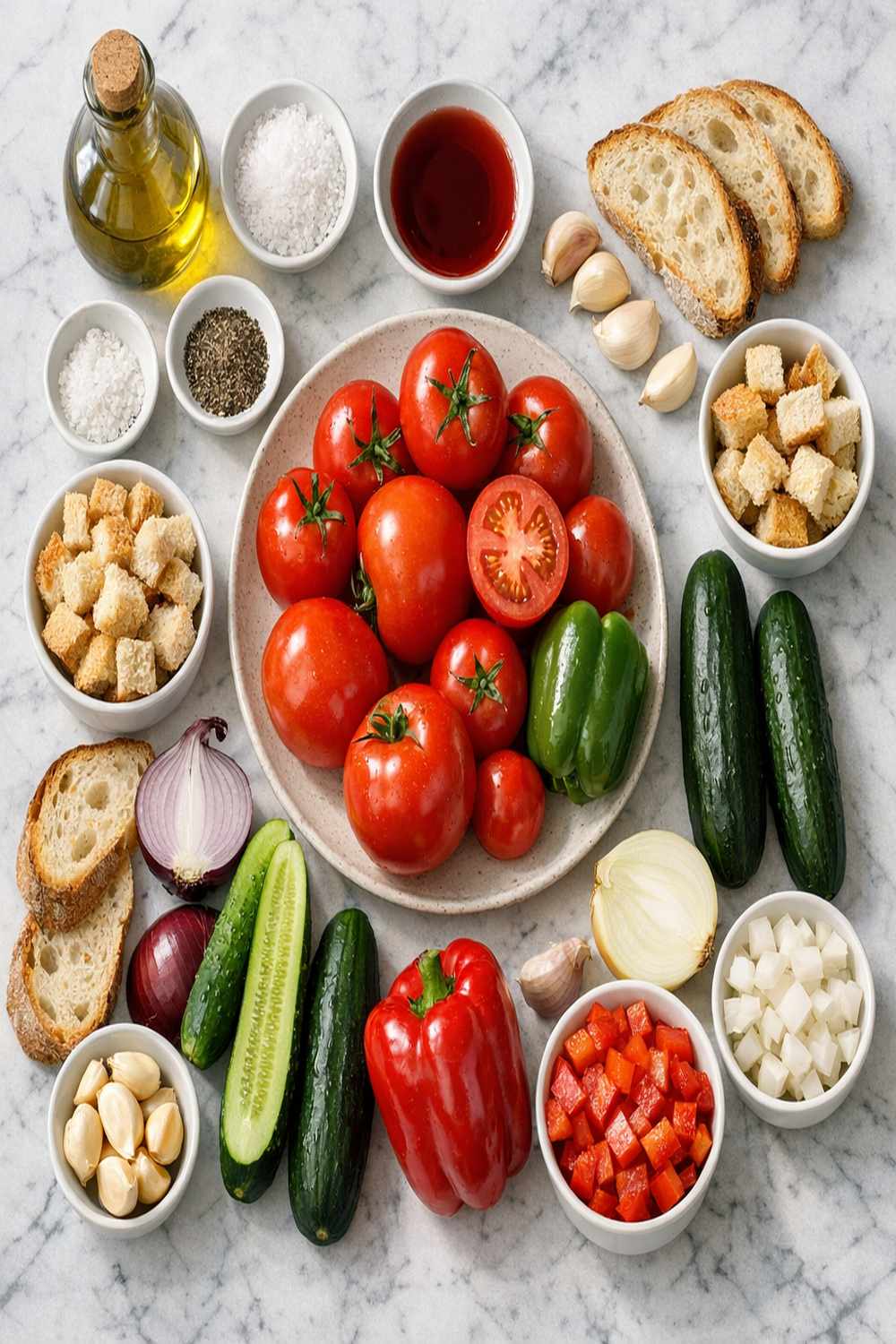
The magic of authentic gazpacho lies in selecting the finest seasonal ingredients. I emphasize choosing vegetables at peak ripeness—this is non-negotiable. A mediocre tomato cannot be rescued by technique; quality produce is your foundation. I source my tomatoes from local Illinois farmers when possible, selecting fruits that smell fragrant and yield slightly to gentle pressure. Each ingredient below plays a specific role in creating the final balance of acidity, richness, and fresh vegetable vitality.
- 2 small garlic cloves (or 1 large clove, peeled and minced for best distribution)
- 1 tablespoon fresh basil or parsley (finely chopped for finishing)
- ½ teaspoon freshly cracked black pepper (ground from peppercorns immediately before use)
- 2 pounds ripe Roma tomatoes (halved, cored, and at room temperature)
- 1 teaspoon fine sea salt (or more to taste, adjusted after blending)
- 1 medium green bell pepper (cored, seeded, and roughly chopped)
- 3 tablespoons extra virgin olive oil (fruity, cold-pressed varieties work best for elegant flavor)
- ½ teaspoon ground cumin (optional, but adds warmth and depth)
- 1 thick slice of white bread (crusts removed, soaked in water until softened)
- ½ small red onion (peeled and thinly sliced)
- 4 tablespoons homemade croutons (for elegant garnish)
- 2 tablespoons sherry vinegar (aged varieties add subtle complexity)
- 1 small (about half pound) cucumber (peeled and seeded to remove excess water)
How to Make Authentic Gazpacho Recipe
The preparation of gazpacho is remarkably straightforward, yet each step deserves your attention and intention. I approach this recipe with the same care I’d give to any refined dish, recognizing that simplicity demands precision. Temperature matters, texture matters, and the sequence of seasoning determines the final result. Follow these steps carefully, and you’ll create something transcendent.
Step 1: Prepare Your Vegetables With Intention
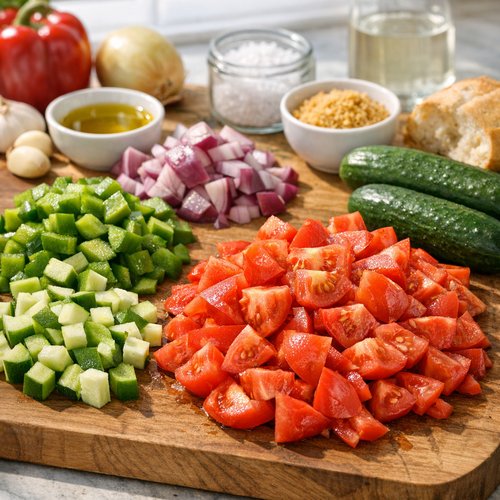
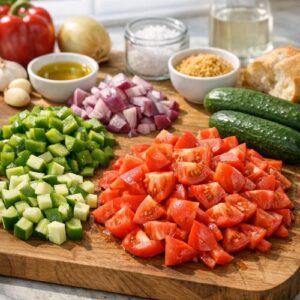
Begin by arranging all your ingredients in front of you, organized by type. Roughly chop your room-temperature tomatoes, removing the core and any tough seeds. Peel your cucumber completely, then slice it lengthwise and scoop out the watery seed cavity with a small spoon—this step removes excess moisture that would dilute your final soup. Slice your green bell pepper into quarters, removing the core and seeds completely. Thinly slice your red onion, and mince your garlic very fine. The goal is not perfect uniformity, but rather pieces approximately the size of a large grape. When vegetables are somewhat uniform, they blend more evenly, creating a silkier final texture.
Step 2: Begin the Blending Process
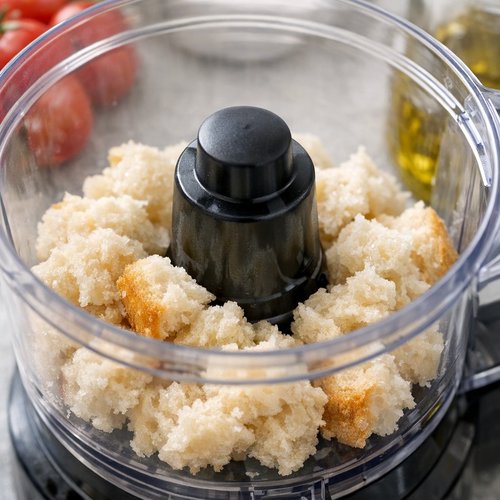
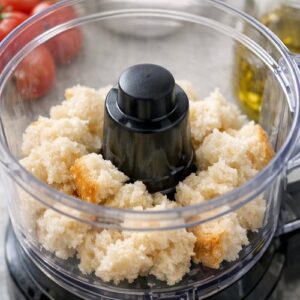
Place your soaked and drained bread into the bowl of your food processor or high-powered blender first. This creates a base that will help emulsify your oil with the vegetables. Add roughly half of your tomatoes on top of the bread, followed by your cucumber pieces, green bell pepper, red onion, and garlic. Pour in your 3 tablespoons of olive oil and 2 tablespoons of sherry vinegar. Season with your salt, pepper, and cumin. Begin processing at medium-high speed, pulsing initially to break down the vegetables before running continuously.
Process for approximately one full minute, monitoring the texture carefully. You’re aiming for a consistency that’s smooth but still maintains slight vegetable texture—almost like a thin pasta sauce. If your mixture seems too thick at this point, don’t worry; you haven’t yet added the remaining tomatoes, which will add additional liquid volume.
Step 3: Add Remaining Tomatoes for Volume and Flavor
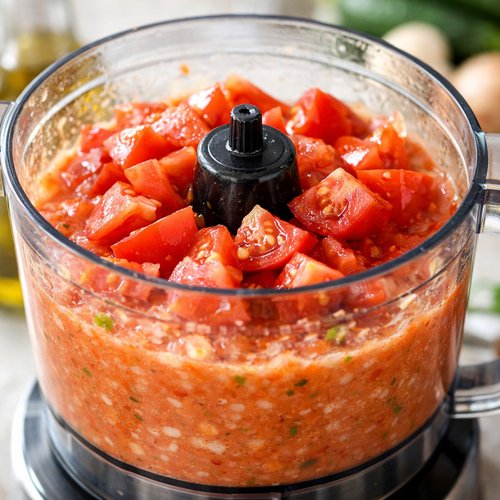
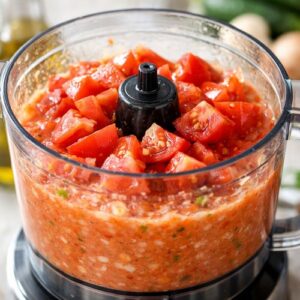
Add your remaining tomatoes to the processor and pulse to incorporate fully. Continue blending for another 30 to 45 seconds, until the consistency reaches your desired texture. Some prefer gazpacho completely smooth, almost sauce-like; others prefer it with slightly more texture. I personally favor a consistency that’s silky and pourable, with just enough body to coat a spoon elegantly. The consistency should fall somewhere between a smoothie and a traditional soup.
Step 4: Taste and Season to Perfection
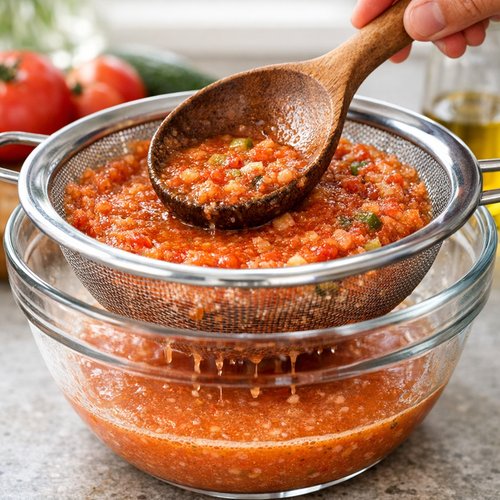
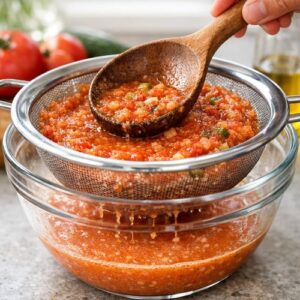
Pour your gazpacho into a fine-mesh strainer suspended over a large mixing bowl. Using the back of a ladle or wooden spoon, gently press the mixture through the strainer, extracting every drop of precious liquid while leaving behind any remaining fiber or small seeds. This step, which takes 5 to 10 minutes, creates an incredibly refined final texture. Transfer the strained gazpacho to your serving vessel.
Now comes the critical tasting step. Taste your gazpacho carefully on a clean spoon. You’re evaluating several dimensions: Does it have bright acidity from the vinegar? Is the savory depth sufficient, or does it need more salt? Does the cumin warmth feel balanced, or would more enhance it? Add salt in small increments—¼ teaspoon at a time—stirring and retasting between additions. Season aggressively; cold foods require more seasoning than hot foods because cold temperatures mute our taste perception. The gazpacho should taste almost slightly over-seasoned when warm to your touch; once thoroughly chilled, it will taste perfectly balanced.
Step 5: Chill Thoroughly for Optimal Flavor Development
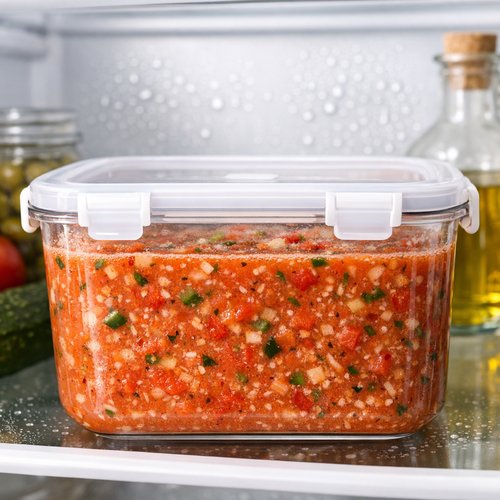
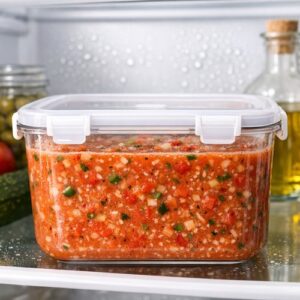
Transfer your perfectly seasoned gazpacho to a sealed container. Refrigerate for a minimum of 3 to 4 hours, though I often prepare gazpacho in the morning and serve it at dinner, allowing 8 to 12 hours of chilling time. This extended chilling does more than simply cool the soup; it allows the flavors to marry and develop complexity. The vegetables continue breaking down slightly, releasing more of their essential oils, while the acid and salt penetrate throughout, creating a more cohesive whole.
Test the temperature before serving—it should be thoroughly cold to the touch, almost icy. I often place my serving bowls in the freezer for 15 minutes before service to maintain optimal temperature through the first few spoonfuls.
Step 6: Plate and Garnish With Elegance
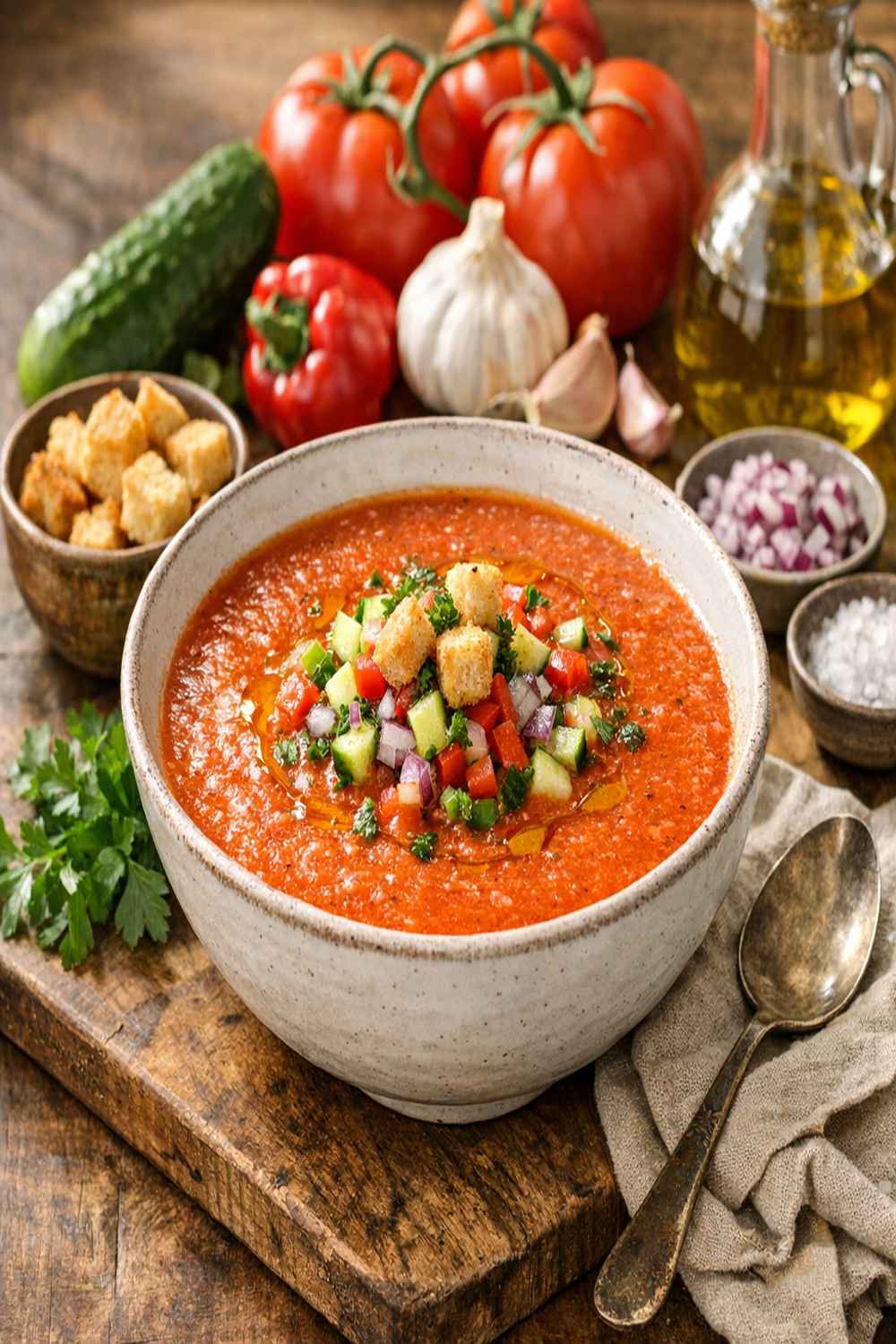
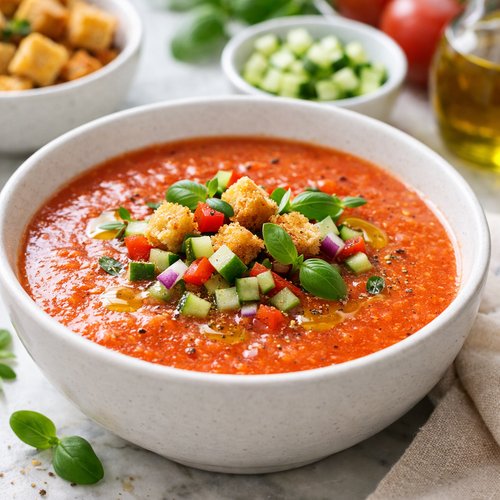
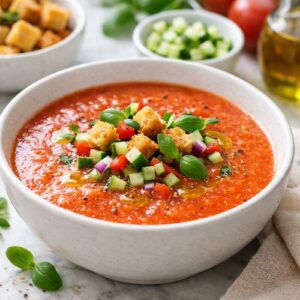
This final step transforms gazpacho from good to extraordinary. Pour your chilled gazpacho into your cold bowls, filling them about three-quarters full. Create height and visual interest with your garnishes. I arrange homemade croutons in the center, then scatter finely chopped fresh basil or parsley across the surface. Drizzle a small amount of your finest olive oil in a thin stream across the top—this catches the light beautifully and adds rich mouthfeel with each spoonful.
Optional garnishes I rotate include finely diced red bell pepper for color contrast, a small dollop of Greek yogurt for creaminess, crispy prosciutto shards for salinity, or even a single microgreen for contemporary elegance. The key is restraint—every element should serve a purpose visually and texturally.
Tips and Tricks
- Temperature Is Everything – Gazpacho should be served genuinely cold, almost ice-cold. Cold temperatures numb our taste buds slightly, which is why you season it more aggressively than you might expect. If your gazpacho tastes perfect at room temperature, it will taste under-seasoned when chilled. Always taste at serving temperature before final adjustments.
- Quality Olive Oil Makes the Difference – Use extra virgin olive oil, and choose one with a fruity or peppery character. The oil creates richness and helps emulsify the vegetables. However, don’t cook with this oil or blend it extensively with heat; the delicate flavor compounds break down. Add most of your oil during blending, then reserve the finest oil for garnishing the finished soup.
- The Bread Is Your Secret Weapon – Don’t skip the bread, and don’t use fresh bread. Stale or soaked bread acts as an emulsifier, helping the oil combine smoothly with the vegetables, creating silkiness without cream. Soak your bread in water for a few minutes, then squeeze it out gently before adding to the processor.
- Room Temperature Vegetables Blend More Evenly – Remove your vegetables from the refrigerator at least 30 minutes before blending. Cold vegetables require more processing power, which can generate heat and alter flavors. Room-temperature vegetables blend more efficiently, creating a smoother result with better color retention.
- Don’t Over-Process Into Oblivion – The line between silky smooth and overly oxidized is thin. Process until you reach your target texture, then stop. Over-processing darkens the color and can make gazpacho taste slightly metallic or dull. If you’re using a high-powered blender, keep your processing time under two minutes total.
- The Straining Step Is Optional But Worth It – For a silkier, more refined soup, strain through fine mesh. This removes tiny seeds and fiber, creating an almost velvety mouthfeel. However, if you prefer more texture and want to retain additional fiber, skip this step. Both approaches are valid; it’s a matter of your personal preference.
Expert’s Nutritional Tip: Lycopene and Heat-Free Preservation
Here’s what fascinates me as both a dietitian and someone who’s studied the science extensively: lycopene, the compound that gives tomatoes their brilliant red color and protects against oxidative stress, is actually more bioavailable when tomatoes are cooked. However, when we prepare gazpacho raw, we preserve the full spectrum of water-soluble vitamins like vitamin C and folate that cooking destroys. The solution? I often recommend serving gazpacho with a small side of warmed tomato-based bread, like toasted tomato crackers, which provides cooked tomato’s lycopene benefit alongside the raw soup’s vitamin preservation. This dual approach gives you the best of both nutritional profiles.
Additionally, the fermentation that begins during the 3-4 hour chilling process introduces beneficial bacteria similar to those in fermented foods. This isn’t full fermentation, but the cool environment and acidic vinegar create conditions where beneficial microbes can establish themselves, potentially supporting your gut microbiome. Another reason to be patient with your chilling time.
Make-Ahead Guide: Planning Your Gazpacho Service
As someone who entertains frequently and understands the demands of preparation, I’ve developed a foolproof timeline for gazpacho service. This is truly one of the most make-ahead-friendly dishes in the refined cooking repertoire.
- The Day Before (or 24 Hours Ahead) – Prepare your gazpacho completely through the chilling step. Store in a sealed container in your coldest refrigerator shelf. The flavors will actually improve overnight as they continue to develop and marry. This advance preparation eliminates all last-minute stress.
- Morning of Service (8 to 12 Hours Before) – If you haven’t prepared gazpacho the previous day, make it in the early morning. Combine all ingredients, blend, season, and refrigerate. This gives adequate time for the soup to chill thoroughly while flavors develop.
- Two Hours Before Serving – Place your serving bowls in the freezer. Prepare all your garnishes: cut croutons into bite-sized pieces, chop fresh herbs, measure your finest olive oil for drizzling. Keep these components separate and refrigerated.
- 30 Minutes Before Serving – Remove gazpacho from refrigerator and do a final taste check. Adjust seasoning if needed. Return to refrigeration immediately.
- At Service Time – Pour gazpacho into your cold bowls, arrange garnishes with intention, and serve immediately. Everything should be done simultaneously, just before your guests sit down.
Can I Store Authentic Gazpacho Recipe?
Yes, gazpacho stores beautifully, which is one of its greatest practical advantages. In an airtight container in your refrigerator, gazpacho will remain fresh and flavorful for 3 to 4 days. The cold environment preserves the vegetables and prevents bacterial growth.
I do not recommend freezing gazpacho. Freezing damages the cell structure of the raw vegetables, causing them to become mushy and separated when thawed. The delicate vegetable texture that makes gazpacho special is lost in the freeze-thaw cycle. Instead, plan to use your gazpacho within four days maximum.
One caveat: gazpacho may separate slightly during storage, with liquid pooling at the bottom while solids settle. This is completely normal and not an indication that anything has gone wrong. Simply stir it gently before serving. Some people prefer this slight separation and will even create intentional layering for visual effect. If separation bothers you aesthetically, re-blend very briefly—just 10 to 15 seconds at low speed—to reincorporate everything.
Nutrition Information
According to USDA nutrition data, one serving (approximately 1.5 cups) of this authentic gazpacho recipe contains approximately 150 calories, with 8 grams of fat from the olive oil, 16 grams of carbohydrates primarily from vegetables, and 3 grams of protein. The sodium content is approximately 580 milligrams, which you can control by adjusting salt to taste.
More importantly, this single serving delivers 35% of your daily vitamin C needs, supporting immune function and collagen synthesis. You’ll get 20% of daily potassium, a mineral essential for heart health and blood pressure regulation. The tomatoes provide lycopene and beta-carotene, carotenoids with powerful antioxidant properties. The cucumber offers silica, which supports bone, skin, and connective tissue health. And the olive oil provides polyphenols, compounds with anti-inflammatory effects supported by extensive research.
This is the kind of nutrient density that makes me genuinely excited as a registered dietitian—you’re getting genuine whole-food nutrition without any processing, additives, or nutritional compromise. Every calorie carries nutritional significance.
What Can I Serve With Authentic Gazpacho Recipe?
Gazpacho is versatile enough to anchor a meal or complement other dishes beautifully. I often serve it as the first course of an elegant dinner, allowing it to refresh the palate before subsequent courses. Here are my favorite serving approaches, each designed to create a cohesive, satisfying meal:
- As a Standalone First Course – Serve gazpacho elegantly plated in smaller portions, preceded by an amuse-bouche and followed by a substantial main course. This is the classic approach and allows your guests to savor the soup’s delicate flavors without distraction.
- As Part of a Light Lunch Spread – Pair gazpacho with Cranberry Goat Cheese Salad, adding textural contrast and complexity. The sweet-tart berries and creamy cheese complement gazpacho’s savory vegetable profile beautifully.
- With Grilled Vegetables and Legumes – Serve gazpacho alongside a small portion of warm grilled vegetables, creating a temperature contrast that’s both physiologically and psychologically satisfying. The warmth of the vegetables enhances their flavors while the chilled soup provides refreshment.
- With Quality Bread and Cheese – Offer toasted bread rubbed with garlic and topped with a quality cheese (aged manchego is traditional). The bread absorbs gazpacho’s flavors and becomes almost a secondary element of the soup itself.
- As a Palate Cleanser Between Courses – In tasting menu style service, gazpacho serves beautifully as a palate cleanser between rich courses, resetting the palate with its bright acidity and fresh vegetable character.
- With Crudités for Casual Entertaining – Serve gazpacho in a large bowl as part of a vegetable crudités spread, using it as a dip for fresh vegetables. This casual presentation is perfect for summer gatherings and allows guests to control their portion size.
Substitutes
- White Gazpacho Instead of Red – If you prefer a lighter, more delicate flavor profile, prepare ajo blanco, the Andalusian white gazpacho made with almonds, garlic, bread, and white grapes instead of tomatoes. The technique is identical; only the primary ingredients change. It’s particularly lovely on intensely hot days when red gazpacho feels too heavy.
- Yellow or Orange Tomatoes Instead of Red – If you can find them, yellow or orange heirloom tomatoes create a gazpacho with subtly different flavor—less acidic, with notes of honey and stone fruit. The color is absolutely stunning, particularly when garnished with basil. All the techniques remain identical.
- Rice Vinegar or Red Wine Vinegar Instead of Sherry – If sherry vinegar is unavailable, rice vinegar works well for a slightly lighter acidity, or red wine vinegar for deeper, more complex acidity. Start with slightly less vinegar than specified and adjust upward; different vinegars have varying acidity levels.
- Dried Bread Instead of Fresh Stale Bread – If you don’t have stale bread available, tear fresh bread into chunks and leave it uncovered on your counter for several hours to dry out slightly. Alternatively, make homemade croutons and grind them to bread crumbs. Any dry bread product will work as the emulsifying binder.
- Greek Yogurt or Crème Fraîche as Garnish – While traditional gazpacho uses no dairy, a small dollop of Greek yogurt or crème fraîche adds creamy richness for those who prefer additional body. This modern adaptation maintains the soup’s health profile while adding luxurious mouthfeel.
- Jalapeño or Serrano Chili for Heat – Add one seeded and minced jalapeño or small serrano chili to the blender for a gazpacho with subtle heat. This Spanish-meets-modern approach works beautifully, particularly if you’re serving to guests who enjoy spice.
Common Mistakes to Avoid
- Using Unripe or Mediocre Tomatoes – This is the most critical mistake. Gazpacho’s entire character depends on tomato quality. If your tomatoes aren’t fragrant and sweet, no technique can rescue the final result. Wait for peak season and seek out farmers market tomatoes that smell like tomatoes should smell. If quality tomatoes are unavailable in your region, gazpacho simply isn’t the appropriate recipe for that moment. Choose another dish instead.
- Skipping the Tasting Step or Under-Seasoning – Because gazpacho will be served cold, many home cooks under-season it, tasting at room temperature. Cold temperatures suppress our taste perception; your gazpacho should taste slightly over-seasoned when tasted warm. Always taste your final product chilled before serving, and don’t be afraid to add salt aggressively.
- Over-Processing Until the Soup Darkens – Extended blending oxidizes the vegetables and darkens the brilliant red color. The soup also becomes darker in flavor—less fresh, more cooked-tasting. Process until you reach your target texture, then stop immediately. Restraint is elegant.
- Skipping the Chilling Time – I understand the temptation to serve gazpacho immediately after preparation, but those 3-4 hours of chilling are essential. They’re not just about temperature; they’re about flavor development and the marriage of ingredients. Gazpacho served warm or room-temperature tastes disconnected and flat. Cold temperature is integral to the recipe’s success.
Seasonal Variations: Adapting Gazpacho Year-Round
While I consider true gazpacho a summer dish, the fundamental technique can be adapted to celebrate seasonal vegetables throughout the year. This approach honors the core philosophy of cooking with what each season offers its best:
- Summer (June through August) – This is gazpacho’s glory season. Use peak-ripeness tomatoes, add fresh basil generously, and perhaps incorporate heirloom tomato varieties for color variation. Consider adding fresh corn kernels as garnish, creating sweetness that contrasts beautifully with the savory base.
- Early Fall (September through October) – As tomato season begins winding down, incorporate red peppers more heavily—they become sweeter and more abundant. Add finely chopped roasted red peppers directly to the soup for additional body. Garnish with toasted hazelnuts for seasonal elegance. Use slightly less cucumber as tomatoes provide sufficient liquid.
- Winter (November through February) – While fresh tomatoes are unavailable, consider preparing a beet-and-horseradish gazpacho using roasted beets and thinned beet juice, creating a soup that captures gazpacho’s essential character while honoring winter vegetables. The technique remains identical; only the primary ingredient shifts. Serve with horseradish cream for warmth.
- Spring (March through May) – As tomatoes begin appearing again, combine them with spring vegetables like peas and fresh herbs like tarragon and chervil. Create a lighter, more delicate version than summer’s robust version. Add fresh lemon juice alongside the vinegar for brighter acidity that echoes spring’s fresh character.

Authentic Gazpacho Recipe
Ingredients
Method
- Begin by arranging all your ingredients in front of you, organized by type. Roughly chop your room-temperature tomatoes, removing the core and any tough seeds. Peel your cucumber completely, then slice it lengthwise and scoop out the watery seed cavity with a small spoon—this step removes excess moisture that would dilute your final soup. Slice your green bell pepper into quarters, removing the core and seeds completely. Thinly slice your red onion, and mince your garlic very fine. The goal is not perfect uniformity, but rather pieces approximately the size of a large grape. When vegetables are somewhat uniform, they blend more evenly, creating a silkier final texture.
- Place your soaked and drained bread into the bowl of your food processor or high-powered blender first. This creates a base that will help emulsify your oil with the vegetables. Add roughly half of your tomatoes on top of the bread, followed by your cucumber pieces, green bell pepper, red onion, and garlic. Pour in your 3 tablespoons of olive oil and 2 tablespoons of sherry vinegar. Season with your salt, pepper, and cumin. Begin processing at medium-high speed, pulsing initially to break down the vegetables before running continuously. Process for approximately one full minute, monitoring the texture carefully. You're aiming for a consistency that's smooth but still maintains slight vegetable texture—almost like a thin pasta sauce. If your mixture seems too thick at this point, don't worry; you haven't yet added the remaining tomatoes, which will add additional liquid volume.
- Add your remaining tomatoes to the processor and pulse to incorporate fully. Continue blending for another 30 to 45 seconds, until the consistency reaches your desired texture. Some prefer gazpacho completely smooth, almost sauce-like; others prefer it with slightly more texture. I personally favor a consistency that's silky and pourable, with just enough body to coat a spoon elegantly. The consistency should fall somewhere between a smoothie and a traditional soup.
- Pour your gazpacho into a fine-mesh strainer suspended over a large mixing bowl. Using the back of a ladle or wooden spoon, gently press the mixture through the strainer, extracting every drop of precious liquid while leaving behind any remaining fiber or small seeds. This step, which takes 5 to 10 minutes, creates an incredibly refined final texture. Transfer the strained gazpacho to your serving vessel. Now comes the critical tasting step. Taste your gazpacho carefully on a clean spoon. You're evaluating several dimensions: Does it have bright acidity from the vinegar? Is the savory depth sufficient, or does it need more salt? Does the cumin warmth feel balanced, or would more enhance it? Add salt in small increments—¼ teaspoon at a time—stirring and retasting between additions. Season aggressively; cold foods require more seasoning than hot foods because cold temperatures mute our taste perception. The gazpacho should taste almost slightly over-seasoned when warm to your touch; once thoroughly chilled, it will taste perfectly balanced.
- Transfer your perfectly seasoned gazpacho to a sealed container. Refrigerate for a minimum of 3 to 4 hours, though I often prepare gazpacho in the morning and serve it at dinner, allowing 8 to 12 hours of chilling time. This extended chilling does more than simply cool the soup; it allows the flavors to marry and develop complexity. The vegetables continue breaking down slightly, releasing more of their essential oils, while the acid and salt penetrate throughout, creating a more cohesive whole. Test the temperature before serving—it should be thoroughly cold to the touch, almost icy. I often place my serving bowls in the freezer for 15 minutes before service to maintain optimal temperature through the first few spoonfuls.
- This final step transforms gazpacho from good to extraordinary. Pour your chilled gazpacho into your cold bowls, filling them about three-quarters full. Create height and visual interest with your garnishes. I arrange homemade croutons in the center, then scatter finely chopped fresh basil or parsley across the surface. Drizzle a small amount of your finest olive oil in a thin stream across the top—this catches the light beautifully and adds rich mouthfeel with each spoonful. Optional garnishes I rotate include finely diced red bell pepper for color contrast, a small dollop of Greek yogurt for creaminess, crispy prosciutto shards for salinity, or even a single microgreen for contemporary elegance. The key is restraint—every element should serve a purpose visually and texturally.
Notes
FAQs
Can I make gazpacho without a blender or food processor?
Traditionally, gazpacho was made by hand, using a mortar and pestle to grind vegetables. While this method is labor-intensive and slower than modern appliances, it absolutely produces results. Start with your bread and garlic, grinding them to a paste. Gradually add your other vegetables in stages, grinding between additions. The process takes significantly longer—perhaps 20 to 30 minutes—but you have more control over texture, and the motion doesn’t generate as much heat as a blender. Some argue that hand-made gazpacho has superior flavor because the gentler processing creates less oxidation. If you have the time and patience, this traditional method is beautiful.
Is gazpacho supposed to be completely smooth or can it have texture?
Both approaches are absolutely valid and authentic. In Spain, gazpacho varies by region and family tradition. Some cooks prefer gazpacho completely smooth and silky, almost sauce-like in consistency. Others prefer a chunkier version with visible vegetable pieces, more similar to a thick vegetable soup. The technique remains identical; you simply stop blending at your preferred texture. I personally gravitate toward silky-smooth gazpacho garnished with textured elements like croutons and fresh vegetables, allowing garnishes to provide textural contrast. Determine your preference based on mouthfeel enjoyment rather than following strict rules.
What should I do if my gazpacho is too thick or too thin?
If your gazpacho is too thick, add cold water in small increments—1 tablespoon at a time—stirring thoroughly between additions. Add water rather than additional oil; too much oil makes gazpacho greasy. If your gazpacho is too thin, purée additional bread (soaked and squeezed) with a small amount of your gazpacho, then stir this mixture back into your larger batch. The bread will thicken through emulsification without changing the flavor profile. You might also add a tomato or two if you have them available, which adds both thickness and flavor.
Can I add other vegetables to gazpacho?
Absolutely, though I encourage thoughtfulness about what you add. Vegetables should be complementary to the tomato and gentle enough not to overpower the soup’s essential character. I’ve successfully added roasted red peppers, fresh corn kernels, finely diced celery, and even fresh herbs like cilantro or tarragon. Avoid strongly flavored vegetables like broccoli, Brussels sprouts, or cabbage, which can dominate the delicate balance. Add new vegetables in small amounts—perhaps 10% of your total volume—and taste carefully before increasing quantity. Remember that gazpacho is fundamentally a tomato soup; the primary ingredient should remain dominant.
Why does my gazpacho taste slightly metallic or bitter?
This typically results from over-blending, which oxidizes the vegetables and damages their cell structure, releasing bitter compounds. Alternatively, you might be using a blender with metal blades that are slightly worn or pitted; these can impart a subtle metallic flavor through oxidation. Finally, if you’ve used tomatoes with green or white interior (under-ripe), these contain alkaloid compounds that taste bitter. Always use fully ripe, sweet tomatoes, and always stop blending the moment your target texture is reached—don’t process a moment longer than necessary. If bitterness appears in your finished soup, a tiny pinch of sugar (just ¼ teaspoon to start) can balance it; taste carefully before adding more.
More Recipes You’ll Love
- How To Make Cranberry Goat Cheese Salad – A perfect summer complement to gazpacho, this salad’s creamy cheese and bright berries provide beautiful contrast to the soup’s savory simplicity.
- 5-Minute Sautéed Spinach with Garlic and Lemon – Serve this quick warm vegetable alongside chilled gazpacho for temperature and textural contrast that feels truly elegant.
- this simple cake – If you’re serving gazpacho as the opening course of an elegant meal, conclude with this refined butter cake, which provides rich, comforting balance to the meal’s lighter opening.
Making gazpacho has transformed how I understand cooking itself. It taught me that refinement doesn’t require complexity, that the most elegant dishes often contain the fewest ingredients, and that understanding the essential character of your ingredients matters infinitely more than following arbitrary rules. When you prepare gazpacho with intention—selecting perfect tomatoes, tasting carefully, allowing flavors to develop—you’re not simply making soup. You’re honoring a culinary tradition that spans centuries while nourishing your body with genuine whole-food nutrition.
I encourage you to make this soup multiple times throughout summer, perhaps varying it slightly as the season progresses and different tomatoes become available. Notice how the flavor shifts, how your preferences