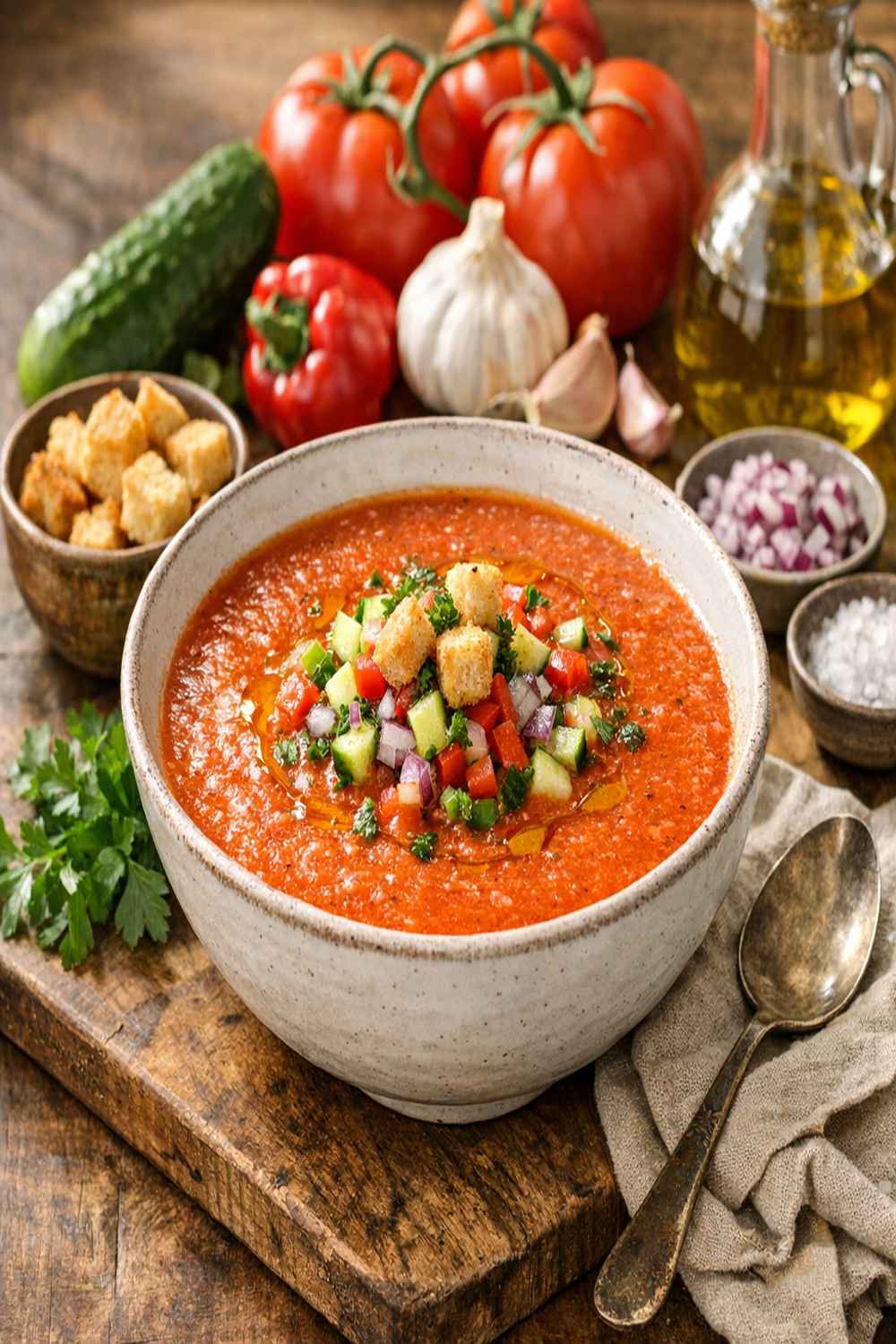

Ingredients
Method
Step 1: Prepare Your Vegetables With Intention
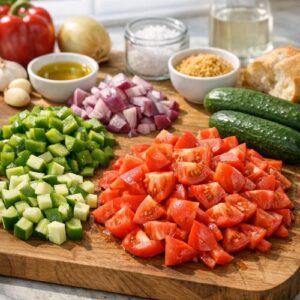
- Begin by arranging all your ingredients in front of you, organized by type. Roughly chop your room-temperature tomatoes, removing the core and any tough seeds. Peel your cucumber completely, then slice it lengthwise and scoop out the watery seed cavity with a small spoon—this step removes excess moisture that would dilute your final soup. Slice your green bell pepper into quarters, removing the core and seeds completely. Thinly slice your red onion, and mince your garlic very fine. The goal is not perfect uniformity, but rather pieces approximately the size of a large grape. When vegetables are somewhat uniform, they blend more evenly, creating a silkier final texture.
Step 2: Begin the Blending Process
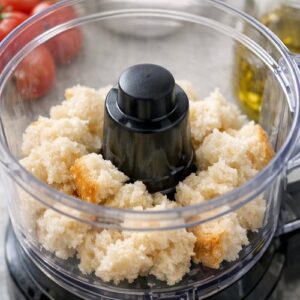
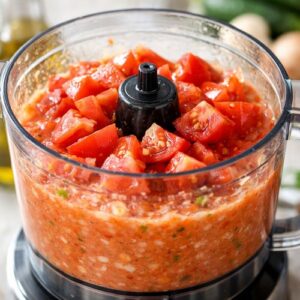
- Place your soaked and drained bread into the bowl of your food processor or high-powered blender first. This creates a base that will help emulsify your oil with the vegetables. Add roughly half of your tomatoes on top of the bread, followed by your cucumber pieces, green bell pepper, red onion, and garlic. Pour in your 3 tablespoons of olive oil and 2 tablespoons of sherry vinegar. Season with your salt, pepper, and cumin. Begin processing at medium-high speed, pulsing initially to break down the vegetables before running continuously. Process for approximately one full minute, monitoring the texture carefully. You're aiming for a consistency that's smooth but still maintains slight vegetable texture—almost like a thin pasta sauce. If your mixture seems too thick at this point, don't worry; you haven't yet added the remaining tomatoes, which will add additional liquid volume.
Step 3: Add Remaining Tomatoes for Volume and Flavor
- Add your remaining tomatoes to the processor and pulse to incorporate fully. Continue blending for another 30 to 45 seconds, until the consistency reaches your desired texture. Some prefer gazpacho completely smooth, almost sauce-like; others prefer it with slightly more texture. I personally favor a consistency that's silky and pourable, with just enough body to coat a spoon elegantly. The consistency should fall somewhere between a smoothie and a traditional soup.
Step 4: Taste and Season to Perfection
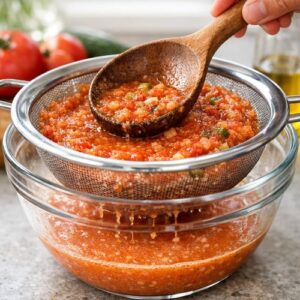
- Pour your gazpacho into a fine-mesh strainer suspended over a large mixing bowl. Using the back of a ladle or wooden spoon, gently press the mixture through the strainer, extracting every drop of precious liquid while leaving behind any remaining fiber or small seeds. This step, which takes 5 to 10 minutes, creates an incredibly refined final texture. Transfer the strained gazpacho to your serving vessel. Now comes the critical tasting step. Taste your gazpacho carefully on a clean spoon. You're evaluating several dimensions: Does it have bright acidity from the vinegar? Is the savory depth sufficient, or does it need more salt? Does the cumin warmth feel balanced, or would more enhance it? Add salt in small increments—¼ teaspoon at a time—stirring and retasting between additions. Season aggressively; cold foods require more seasoning than hot foods because cold temperatures mute our taste perception. The gazpacho should taste almost slightly over-seasoned when warm to your touch; once thoroughly chilled, it will taste perfectly balanced.
Step 5: Chill Thoroughly for Optimal Flavor Development
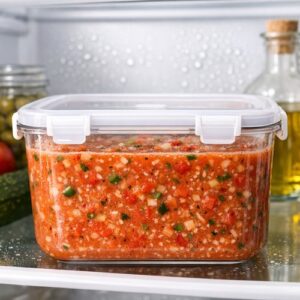
- Transfer your perfectly seasoned gazpacho to a sealed container. Refrigerate for a minimum of 3 to 4 hours, though I often prepare gazpacho in the morning and serve it at dinner, allowing 8 to 12 hours of chilling time. This extended chilling does more than simply cool the soup; it allows the flavors to marry and develop complexity. The vegetables continue breaking down slightly, releasing more of their essential oils, while the acid and salt penetrate throughout, creating a more cohesive whole. Test the temperature before serving—it should be thoroughly cold to the touch, almost icy. I often place my serving bowls in the freezer for 15 minutes before service to maintain optimal temperature through the first few spoonfuls.
Step 6: Plate and Garnish With Elegance
- This final step transforms gazpacho from good to extraordinary. Pour your chilled gazpacho into your cold bowls, filling them about three-quarters full. Create height and visual interest with your garnishes. I arrange homemade croutons in the center, then scatter finely chopped fresh basil or parsley across the surface. Drizzle a small amount of your finest olive oil in a thin stream across the top—this catches the light beautifully and adds rich mouthfeel with each spoonful. Optional garnishes I rotate include finely diced red bell pepper for color contrast, a small dollop of Greek yogurt for creaminess, crispy prosciutto shards for salinity, or even a single microgreen for contemporary elegance. The key is restraint—every element should serve a purpose visually and texturally.

Notes
- Temperature Is Everything - Gazpacho should be served genuinely cold, almost ice-cold. Cold temperatures numb our taste buds slightly, which is why you season it more aggressively than you might expect. If your gazpacho tastes perfect at room temperature, it will taste under-seasoned when chilled. Always taste at serving temperature before final adjustments.
- Quality Olive Oil Makes the Difference - Use extra virgin olive oil, and choose one with a fruity or peppery character. The oil creates richness and helps emulsify the vegetables. However, don't cook with this oil or blend it extensively with heat; the delicate flavor compounds break down. Add most of your oil during blending, then reserve the finest oil for garnishing the finished soup.
- The Bread Is Your Secret Weapon - Don't skip the bread, and don't use fresh bread. Stale or soaked bread acts as an emulsifier, helping the oil combine smoothly with the vegetables, creating silkiness without cream. Soak your bread in water for a few minutes, then squeeze it out gently before adding to the processor.
- Room Temperature Vegetables Blend More Evenly - Remove your vegetables from the refrigerator at least 30 minutes before blending. Cold vegetables require more processing power, which can generate heat and alter flavors. Room-temperature vegetables blend more efficiently, creating a smoother result with better color retention.
- Don't Over-Process Into Oblivion - The line between silky smooth and overly oxidized is thin. Process until you reach your target texture, then stop. Over-processing darkens the color and can make gazpacho taste slightly metallic or dull. If you're using a high-powered blender, keep your processing time under two minutes total.
- The Straining Step Is Optional But Worth It - For a silkier, more refined soup, strain through fine mesh. This removes tiny seeds and fiber, creating an almost velvety mouthfeel. However, if you prefer more texture and want to retain additional fiber, skip this step. Both approaches are valid; it's a matter of your personal preference.